
Peer-to-Peer (P2P) finance represents one of the most significant shifts in the modern financial landscape, moving away from centralized institutional control toward a decentralized, user-centric model. At its core, P2P finance is a method of debt financing that enables individuals and businesses to borrow and lend money without the use of an official financial institution as an intermediary. By leveraging digital platforms to match those who have capital with those who need it, P2P finance strips away the overhead costs of traditional banking, theoretically offering better rates for both parties.
The genesis of the P2P movement can be traced back to the early 2000s, born from a combination of advancing internet technology and a growing distrust in traditional banking systems following global economic fluctuations. While traditional banks operate on a “fractional reserve” system—taking deposits and lending out a multiple of those reserves while keeping the spread—P2P platforms act strictly as a marketplace. This structural difference fundamentally changes the risk profile and the efficiency of the transaction, creating a lean, automated environment where algorithms, rather than loan officers, often dictate the flow of capital.
The Mechanics of the P2P Marketplace
To understand how P2P finance functions, one must look at the three-way relationship between the lender, the borrower, and the platform. The platform serves as the digital infrastructure, providing the credit scoring tools, the legal framework for contracts, and the payment processing systems. When a borrower applies for a loan, the platform conducts a “soft” or “hard” credit pull and assigns a risk grade. This grade determines the interest rate the borrower will pay. Once the loan is listed, individual investors can choose to fund the entire loan or, more commonly, purchase small “notes” or fractions of many different loans to diversify their risk.
From the investor’s perspective, P2P finance is an attractive alternative asset class. In an era where traditional savings accounts or government bonds might offer yields that barely keep pace with inflation, P2P lending can provide significantly higher annual returns. However, these returns come with the trade-off of “credit risk.” Unlike a bank deposit, which is often insured by government entities up to a certain limit, P2P investments are generally not protected. If a borrower defaults on their loan, the investor loses the remaining principal on that specific note, making diversification the most critical strategy for any P2P lender.
Diversification and Risk Management
Risk management in P2P finance is a quantitative exercise. Because these loans are typically unsecured—meaning they aren’t backed by collateral like a house or a car—the primary defense against loss is the law of large numbers. A sophisticated P2P investor doesn’t put $5,000 into a single loan; instead, they might put $25 into 200 different loans across various risk grades. This ensures that even if a small percentage of borrowers default, the interest earned from the performing loans covers the losses and still provides a net profit.
Platforms have become increasingly adept at using “Big Data” to refine their risk models. Beyond traditional credit scores, some platforms analyze thousands of data points, including social media footprints, utility payment history, and even the speed at which an applicant types their information, to predict the likelihood of repayment. This technological edge allows P2P finance to serve the “underbanked”—individuals who may have a thin credit file but are otherwise financially responsible—thereby expanding the reach of credit to sectors that traditional banks might deem too small or too risky to bother with.
The Role of Blockchain and DeFi
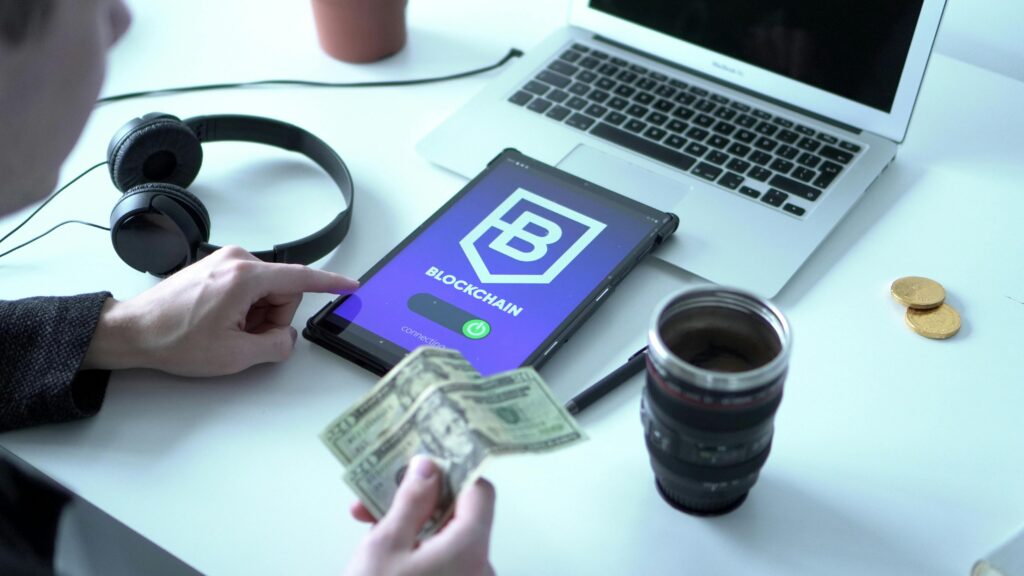
The most recent evolution of P2P finance is the rise of Decentralized Finance (DeFi), which utilizes blockchain technology to remove the platform intermediary itself. In a DeFi P2P ecosystem, the “platform” is replaced by a smart contract—a self-executing piece of code on a blockchain like Ethereum. These contracts automatically manage the collateral, interest rates, and liquidations without any human intervention. This represents the ultimate form of P2P finance, where the rules are transparent, immutable, and accessible to anyone with an internet connection, regardless of their geographic location.
In the DeFi space, P2P lending often requires “over-collateralization.” For example, to borrow $1,000 in a stablecoin, a user might need to deposit $1,500 worth of Bitcoin as collateral. If the value of the collateral drops below a certain threshold, the smart contract automatically sells the Bitcoin to repay the lender. This creates a trustless environment where the lender’s capital is protected by code and math rather than the legal system or a borrower’s credit score. While this is a more technical corner of the market, it demonstrates the trajectory of P2P finance toward total automation and global accessibility.
Regulatory Landscape and Future Outlook
As P2P finance has grown from a niche experiment into a multi-billion dollar industry, regulators have taken notice. In the early days, the industry was often described as the “Wild West,” with varying degrees of transparency and consumer protection. Today, most major jurisdictions have implemented frameworks to ensure that platforms are honest about their default rates, that they hold sufficient capital reserves, and that they follow anti-money laundering (AML) and “know your customer” (KYC) protocols. These regulations, while adding complexity, have helped institutionalize the space, making it safer for retail investors.
Looking ahead, the future of P2P finance lies in its integration with the broader “Open Banking” movement. As APIs allow different financial services to communicate more seamlessly, P2P lending could become a standard feature within digital wallets and accounting software. Small businesses, in particular, stand to benefit as P2P platforms can offer “just-in-time” financing based on real-time sales data rather than static annual tax returns. This agility makes P2P finance a vital component of a modern, resilient economy.
In conclusion, Peer-to-Peer finance has successfully challenged the monopoly of traditional banks by offering a more efficient, transparent, and democratic way to move capital. While it requires a higher level of financial literacy and risk awareness from its participants, the benefits of lower borrowing costs and higher investment yields continue to drive its adoption. Whether through traditional centralized platforms or the new frontier of DeFi, the P2P model has proven that in the digital age, the “crowd” can be just as effective at managing money as the bank.