Trading is often romanticized in popular culture as a high-stakes game of intuition and adrenaline. However, behind the flickering green and red candles on a monitor lies a disciplined profession rooted in probability, psychology, and rigorous risk management. Unlike investing—which focuses on long-term value creation and the compounding of assets over decades—trading is the act of speculating on short-term price movements to generate consistent profit.
In the modern digital era, the barriers to entry have vanished. Anyone with a smartphone and a few hundred dollars can access the global markets. But this accessibility is a double-edged sword; while the opportunity is vast, the failure rate for retail traders remains high. Success in trading is not about “predicting” the future, but about developing an “edge” and executing it with robotic consistency.
1. The Taxonomy of Trading: Markets and Styles
Before placing a single order, a trader must define their playground and their tempo. The financial world is divided into several major markets, each with its own personality.
The Major Markets
- Equities (Stocks): Trading shares of public companies. This market is heavily influenced by quarterly earnings, news cycles, and sector trends.
- Foreign Exchange (Forex): The largest and most liquid market in the world, where currencies are traded in pairs (e.g., EUR/USD). It operates 24 hours a day and is driven by macroeconomic data and central bank policies.
- Commodities: Trading physical goods like gold, oil, wheat, or natural gas. These are often used as hedges against inflation or geopolitical instability.
- Derivatives (Options & Futures): Complex instruments that derive their value from an underlying asset. They allow for high leverage, meaning you can control a large position with a small amount of capital.
- Cryptocurrencies: The newest frontier, characterized by 24/7 volatility and high speculative interest.
Trading Styles
Your style should align with your personality and daily schedule.
- Scalping: Making dozens or hundreds of trades a day, holding positions for seconds or minutes to capture tiny price fluctuations.
- Day Trading: Entering and exiting positions within the same trading day. Day traders never hold positions overnight to avoid “gap” risk.
- Swing Trading: Holding positions for several days or weeks. This style looks to capture “swings” in price trends and is ideal for those with full-time jobs.
- Position Trading: The longest timeframe for a trader, holding for months. This is a hybrid between trading and investing, focusing on large-scale macro trends.
2. Analysis: How Traders Make Decisions
Traders generally fall into two camps of analysis, though the most successful often use a blend of both.
Fundamental Analysis
This involves looking at the intrinsic value of an asset. For a stock trader, this means analyzing balance sheets, P/E ratios, and management quality. For a Forex trader, it means tracking interest rates, GDP growth, and employment data. The goal is to determine if an asset is “undervalued” or “overvalued” by the market.
Technical Analysis (TA)
Technical analysis is the study of historical price action and volume to predict future movements. TA is based on the belief that “the market discounts everything”—meaning all known information is already reflected in the price.
- Support and Resistance: Levels where price has historically struggled to fall below (support) or rise above (resistance).
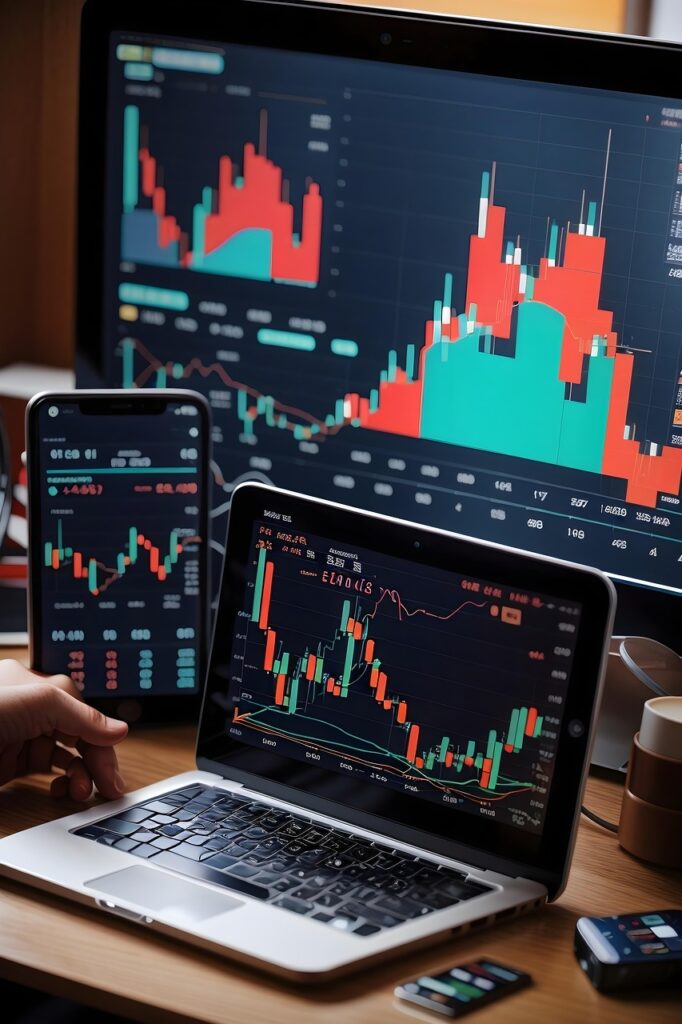
- Candlestick Patterns: Visual representations of price action (Open, High, Low, Close) that signal buyer or seller exhaustion.
- Indicators: Mathematical overlays like Moving Averages, the Relative Strength Index (RSI), and Bollinger Bands that help filter market “noise.”
3. The Holy Trinity of Trading: Strategy, Risk, and Mindset
A profitable trader is supported by three pillars. If one collapses, the account eventually goes to zero.
I. The Strategy (The Edge)
An “edge” is simply a higher probability of one thing happening over another. A strategy must be backtested (tested against historical data) and forward-tested (traded on a demo account) before live capital is risked. A strategy defines:
- Setup: What specific conditions must be met to enter?
- Entry: At what exact price do I buy or sell?
- Exit: At what price do I take profit?
II. Risk Management (The Survival Instinct)
This is the most critical and most ignored aspect of trading.
- The 1% Rule: Never risk more than 1% of your total account balance on a single trade. If you have $10,000, your “Stop Loss” should ensure you don’t lose more than $100 if the trade goes wrong.
- Risk-to-Reward Ratio (R:R): Always aim for a setup where the potential reward is significantly higher than the risk. A common R:R is 1:2. If you risk $100, you aim to make $200. With a 1:2 ratio, you only need to be right 34% of the time to remain profitable.
III. Trading Psychology (The Human Element)
The market is a master at exploiting human emotions—specifically Greed and Fear.
- Fear: Causes traders to hesitate on valid setups or exit winning trades too early.
- Greed: Leads to “over-leveraging” (trading too large) or “revenge trading” (trying to “win back” money after a loss).Successful traders operate with “mechanical detachment.” They accept that losses are simply the “cost of doing business,” much like a restaurant owner accepts the cost of ingredients.
4. The Lifecycle of a Trade: From Analysis to Journaling
A professional trade follows a strict workflow:
- Preparation: Scanning the markets for setups that fit the strategy.
- Execution: Placing the order with a pre-set Stop Loss and Take Profit.
- Management: Monitoring the trade. Does the thesis still hold? Should the stop loss be moved to “break-even”?
- The Post-Mortem (Journaling): Once the trade is closed, it must be recorded. What went right? Did I follow my rules? Journaling is the only way to turn “experience” into “expertise.”
5. Common Pitfalls for Beginners
- Overtrading: Feeling the need to be in the market at all times. Often, the best trade is “sitting on your hands.”
- Lack of a Plan: Trading based on “gut feeling” or a tip from social media.
- Ignoring the News: Trading a technical setup right before a major economic announcement (like an interest rate hike) can lead to massive “slippage” and losses.
- Using Too Much Leverage: Leverage is a tool, not a shortcut. It magnifies both gains and losses equally.
A Marathon, Not a Sprint
Trading is perhaps the hardest way to make “easy money.” It requires a level of self-discipline and emotional control that few other professions demand. However, for those who treat it with the respect of a business—prioritizing capital preservation over ego and education over excitement—it offers a level of freedom and intellectual challenge that is hard to find elsewhere.
The goal of a trader is not to make a million dollars today; it is to trade well enough today so that they have the capital and the mindset to trade again tomorrow. In the markets, longevity is the ultimate indicator of success.